








by Elisabeth Moyer
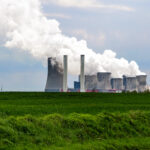
In 1896, when a Swedish scientist first predicted that burning coal would cause Earth to warm up, some people thought that was great. In 1912, Popular Mechanics magazine bragged that our industries were “add(ing) to the carbon dioxide in the Earth’s atmosphere so that men in generations to come shall enjoy milder breezes.”
By the 1970s, though, public opinions had shifted, and people started worrying instead about the disruption a changing climate might bring. Now, changes are finally happening on a scale that people can feel.
Those effects – warmer winters, flash flooding, wildfires – are basic consequences of that late 19th century forecast. It might seem counterintuitive climate changes could bring both floods and dryness, which seem like extremes on opposite ends of the weather spectrum, but they are connected.
Earth ‘sweats’ more or less, depending on greenhouse gases
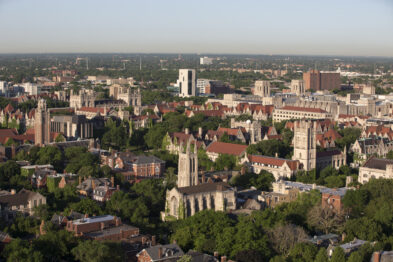
To understand the connection, it helps to zoom out. When I teach my “Climate Foundations” class at the University of Chicago, I start by asking: Why is Earth different from the moon?
Both are the same distance from the sun and get the same sunshine, but the moon is ferociously hostile: hotter than our boiling point in the daytime, colder than Antarctica at night. When astronauts went to the moon, they needed multimillion dollar spacesuits in today’s value to keep them alive through those extremes.
What makes Earth different is its atmosphere, a thin layer of air that alters our planet entirely. It smooths out temperatures by moving heat around, and a tiny part of it – its greenhouse gases, which are mostly carbon dioxide and water vapor – create astonishing effects by trapping infrared radiation.
That means Earth’s surface, unlike the moon’s, cannot just radiate the sun’s energy it absorbs back into space. Instead, it sheds heat largely by evaporating water and moving warm, moist air upward, where it cools and its water recondenses, making clouds and rain.
In a sense, Earth cools by sweating.
Higher temperatures mean more moisture and more drying
This helps us understand what happens when we add more carbon dioxide to the atmosphere: Earth gets even less moon-like.
First, temperatures get warmer, but also more even. In general, cold places warm more than warm ones, nights more than days, winters more than summers. These are general long-term trends, not brief cold snaps or heat waves that we notice more easily.
The overall trend lines are good for heating bills, but bad for winter sports. It’s looking grim for backyard ice rinks in Minnesota and Wisconsin.
Second, Earth’s surface relies on evaporative cooling to shed excess heat. More carbon dioxide in the atmosphere means more rain on average (most models show 1% to 2% per degree Celsius of warming), but also faster evaporation.
And there’s an extra complication: Warmer air holds significantly more moisture – 6% to 7% per Celsius degree.
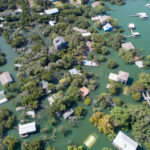
So when it does rain, the rain is more intense, but in between, there are more dry days. The result is more flash flooding but drier soils. That’s the seeming contradiction.
Warmer air also promotes wildfires. Because that air can hold more moisture, it tends to suck water out of vegetation. Drier forests burn, and the fires burn hot and spread fast.
We’re now starting to see larger wildfires and fires in new areas. While the West Coast is used to fire season, forest fires in central Canada are sending smoke into cities that historically haven’t seen it often: Chicago, New York, Washington, DC.
There are other changes coming that are certain, but slower. Because warmer water swells slightly, sea levels must rise, even without ice melting.
Don’t buy beachfront property in Florida for your great-grandchildren. Visit New Orleans while you can.
Not an apocalypse, but a time to plan
All this is scary, but it helps to have perspective. Earth has seen higher carbon dioxide levels and temperatures in the past, but it wasn’t a lifeless hellhole.
Life finds a way. But the changes are coming fast now, and human systems are fragile.
We have more than 8 billion people who want food, housing, schools, roads, cars and other modern conveniences. The sooner we stop arguing over climate change, the sooner we can move to sensible planning to limit the damage.
Elisabeth Moyer is an associate professor in the Department of the Geophysical Sciences at the University of Chicago, a former director of the university’s Center for Robust Decision-making on Climate and Energy Policy and a faculty affiliate of the Institute for Climate and Sustainable Growth.